

India converting waste to clean energy at scale: Hardeep Puri
With 133 CBG plants commissioned, of 926 TPD capacity, and availability at 410 retail outlets, CBG ecosystem is expanding rapidly
India converting waste to clean energy at scale: Hardeep Puri
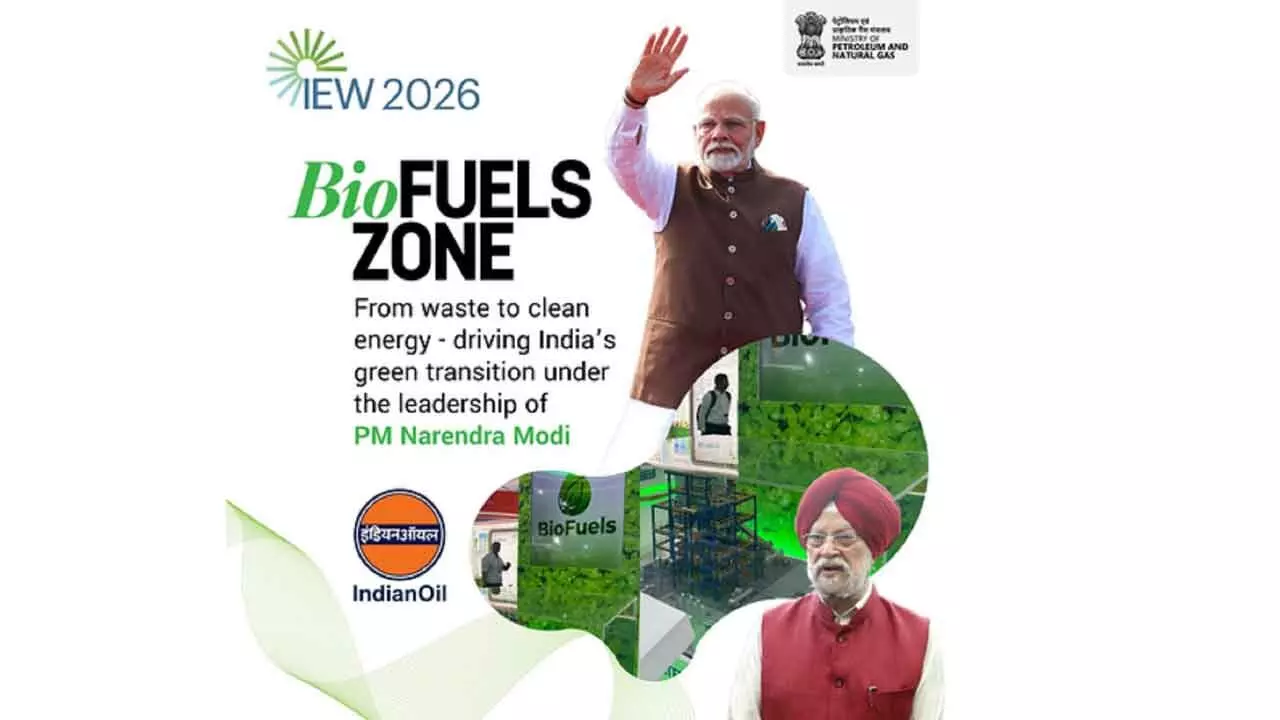
Petroleum and Natural Gas Minister Hardeep Singh Puri on Friday highlighted that the Biofuels Zone at India Energy Week 2026 showcases how waste is being transformed into clean energy at scale in the country.
"With 133 CBG (compressed bio-gas) plants commissioned, of 926 TPD (tonnes per day) capacity, and availability at 410 retail outlets, India’s CBG ecosystem is expanding rapidly - strengthening energy security and sustainability," the minister said.
Another 83 CBG are under construction and will create an additional capacity of around 700 TPD. The TPD represents the daily capacity of waste feedstock, such as agricultural residue, that a plant can process to generate compressed biogas and organic manure.
CBG plants convert organic waste -- such as agricultural residue, cattle dung, municipal solid waste, and sugarcane press mud -- into purified, compressed methane. These plants, promoted under the SATAT scheme to reduce pollution and import dependency, produce a renewable fuel with over 90-95 per cent methane content, acting as a direct green alternative to CNG in vehicles and industries.
Organic waste undergoes anaerobic decomposition to produce biogas, which is then purified to remove carbon dioxide, hydrogen sulphide, and water vapour at the CBG plants. CBG is similar to CNG in calorific value, making it suitable for automotive, industrial, and commercial use. It reduces reliance on imported natural gas, promotes waste-to-energy, decreases carbon emissions, and boosts rural incomes. The production of CBG also helps reduce reliance on imported natural gas and crude oil.
Besides, the CBG plants produce high-quality organic manure (fermented organic manure) as a byproduct, which can be used in farms to increase crop yields.
The SATAT (Sustainable Alternative Towards Affordable Transportation) scheme was launched on October 1, 2018, aiming to establish 5,000 CBG plants
nationwide.





